When metal repairs demand durability under heat, choosing the right high-temperature glue is essential. This guide rounds up robust metal repair epoxies designed to withstand elevated temperatures, corrosion, and heavy use—ideal for automotive, marine, plumbing, and industrial applications. Below you’ll find five top-rated options, each with strong bonding for metal-to-metal and metal-to-ceramics or plastics, quick curing times, and heat resistance. Use this overview to compare performance and select the best glue for your high-heat metal repair needs.
| Product | Brand | Key Temperature | Best For |
|---|---|---|---|
| KEWEIYOW Metal Glue | KEWEIYOW | Heat resistant; up to high temperatures | Engines, pipes, tanks, outdoor fixtures |
| KAVLEE Strong Foundry Glue | KAVLEE | Up to 150 °C | Metal casts, repairs, durable bonds |
| vicpricme Heavy-Duty Glue | vicpricme | Up to 287 °C (cured) | Automotive, marine, plumbing |
| AOJEL 2-Part Epoxy Metal Glue | AOJEL | 200 °C withstand | Automotive, construction, outdoor |
| Ganbaro Metal Repair Glue | Ganbaro | Up to 150 °C | Metal casting defects, repairs |
Note: Each product is a two-part epoxy or similar high-temperature formulation designed to form a strong, durable bond on metal surfaces and compatible materials. Review application instructions and curing times to ensure optimal performance for your specific project.
KEWEIYOW Heavy Duty Metal Glue

Product overview: 1.76oz two-part heavy duty epoxy with a 1:1 syringe, designed for metal, plastic, ceramic, and more. Cures quickly with low odor. Ideal for repairing car bodies, marine fittings, tanks, pipes, and cast metal parts. Features high adhesion, hardness, and toughness, with reusability and simple operation. It’s aimed at durable bonding under elevated temperatures and demanding environments.
KAVLEE Strong Foundry Glue
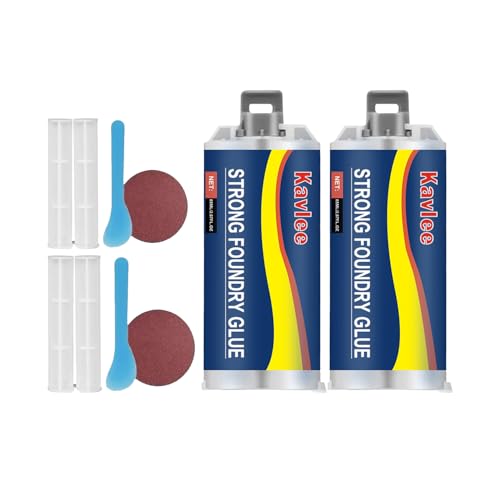
Product overview: High-temperature resistant liquid metal welding filler, withstanding up to 150 °C. Designed for metal casting repairs with durable, stable bonds. For best results, ensure surfaces are clean and dry; if the glue hardens, warm water can soften the adhesive before reuse. Suitable for shaping, tapping, filing, and drilling after curing.
RunBuxd Strong Foundry Glue

Product overview: Two-packs featuring a fast-curing, high-temperature resistant metal bonding solution. It offers instant, long-lasting bonds suitable for cast iron, steel, and other metals. The formula emphasizes ease of use with quick assembly, cleanup-friendly curing times, and durable performance in demanding environments.
vicpricme Heavy-Duty Metal Glue

Product overview: A 1.76 oz two-component epoxy designed for wide material compatibility, including metal, aluminum, copper, stainless steel, wood, plastic, and glass. Cures quickly (about 5 minutes) and fully in 24 hours. It provides a cured bond strong enough to be drilled, sanded, and painted, with temperature resistance and durability suitable for automotive and marine repairs.
Teenanseen Metal Repair Glue

Product overview: A 2-pack professional-grade, heavy-duty epoxy designed for metal, plastics, and ceramics. It promises long-lasting bonds, high-temperature resistance, and clean, odorless formulation. Suitable for repairs on boats, cars, fuel tanks, heaters, and various metal components, with strong adhesion and durable performance over time.
Buying Guide: Key Considerations For High-Temperature Metal Repairs
- Temperature rating: Check the maximum operating temperature and curing temperature. Choose a glue rated for at least the highest temperature your project will encounter.
- Material compatibility: Ensure the adhesive bonds well to the involved metals (steel, aluminum, iron) and any non-metal substrates (ceramics, plastics, glass) in your repair.
- Curing time and handling strength: Consider pour time, clamp time, and full cure duration. Fast-curing formulas are helpful for small repairs, while longer cure times may yield stronger final bonds.
- Viscosity and gap filling: Thicker formulations fill gaps in castings or irregular surfaces; thinner glues penetrate tight joints more easily.
- Durability under moisture and chemicals: If the repaired item faces water, salt exposure, oils, or solvents, verify resistance specs.
- Application method: Syringe 1:1 mixing, dual-tube systems, or pre-measured packs affect ease of use and consistency.
- Repair scope: For structural repairs, prioritize high strength, impact resistance, and the ability to be drilled or machined after curing.
- Safety and odor: Look for low-odor options and proper ventilation during use; follow all safety instructions on the label.
- Surface prep: Clean, dry surfaces improve adhesion. Some products require roughening or degreasing before application.
- Repair versatility: If you anticipate multiple materials, choose a multi-material epoxy with broad bonding capability.
All listed products are designed to perform under elevated temperatures and offer varying degrees of strength, cure profiles, and material compatibility. Review the specific data sheets and manufacturer guidelines to match the best option to your project’s metal type, operating temperature, and required working time.