Protecting cattle from flies requires a multi-faceted approach. This guide highlights the most effective, non-toxic options available on the market, covering larvicides, ear tags, dust formulations, and mineral supplements with fly-prevention benefits. Each option targets common cattle flies and varies by application method and duration of protection. The selections below are chosen for broad efficacy, safety, and ease of use for American ranchers and farmers.
| Product | |||
|---|---|---|---|
| JustiFLY Feedthrough Cattle Fly Control (Single) | Larvicide Feedthrough | Controls four fly species; pennies per head/day | Amazon |
| JustiFLY Feedthrough Cattle Fly Control (3 Pack) | Larvicide Feedthrough | Economical multi-pack; long-lasting on-farm | Amazon |
| Elanco CyLence Ultra Insecticide Cattle Ear Tags | Ear Tags | Multi-species control; up to five months protection | Amazon |
| Bonide Fly, Lice & Tick Control Dust-On | Dust-On Insecticide | Ready-to-use; versatile on multiple livestock | Amazon |
| Co-RAL 1% Livestock Dust | Insecticide Dust | Direct application on cattle; fast relief | Amazon |
JustiFLY Feedthrough Cattle Fly Control — Single

JustiFLY Feedthrough is a convenient 360-gram add-pack designed for on-farm use. It treats a 50-lb bag of free-choice mineral, breaking the life cycle of horn flies, stable flies, house flies, and face flies. The product is non-toxic and focuses on larval control to reduce fly populations over time, benefiting cattle health and comfort with economical daily use.
JustiFLY Feedthrough Cattle Fly Control — 3 Pack

This 3-pack option provides the same On-Farm feedthrough larvicide in multiple add-packs for broader coverage. Each 360-gram add-pack supports one 50-lb bag of mineral supplement and targets the same four fly species. It offers scalability for larger herds and longer grazing seasons, helping manage fly pressure across extensive operations.
Elanco CyLence Ultra Insecticide Cattle Ear Tags

CyLence Ultra ear tags deliver multi-species control, targeting face flies, horn flies, gulf coast ticks, and spinose ear ticks on beef and dairy cattle. Protection can last up to five months, making these tags a low-maintenance option. Beta-cyfluthrin, a synergized pyrethroid, is the active ingredient, contributing to durable fly and tick control with established efficacy in cattle operations.
Bonide Fly, Lice & Tick Control Dust-On
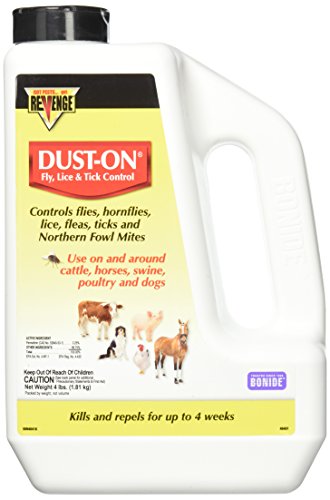
This ready-to-use dust-on product provides reliable fly, lice, and tick control for horses, cattle, sheep, goats, and hogs, with additional utility against fleas and bedbugs. It is suitable for on-animal treatment and can serve as part of an integrated fly management plan on mixed-species farms.
Co-RAL 1% Livestock Dust

Co-RAL 1% Livestock Dust provides direct on-animal application against horn flies, face flies, and lice. It is ready to use, with no downtime between treatment and slaughter or milk production, offering quick, convenient relief for ongoing fly pressure on cattle operations.
JustiFLY Feedthrough Cattle Fly Control — 6 Pack

A six-pack variant of the JustiFLY feedthrough solution extends coverage for larger herds or prolonged seasons. It maintains the same non-toxic larvicide action and the same broad fly-species impact, enabling farmers to plan for extended fly control across multiple pastures with consistent dispensing.
JustiFLY Feedthrough Cattle Fly Control — 12 Pack

The 12-pack option provides extensive coverage for large operations or multiple pastures. It preserves the same larvicide-based strategy designed to interrupt the fly life cycle and reduce fly pressure across the herd, contributing to improved cattle comfort and health with sustained use.
Buying Guide — Key Purchase Considerations And Comparisons
When selecting fly controls for cattle, consider the following factors to align with herd size, operation type, and management goals:
- Mode of action: Larvicide feedthroughs disrupt fly development at the larval stage, reducing emergent adults over time, while ear tags and dusts provide immediate or mid-term species control depending on formulation.
- Target species: Horn flies, face flies, stable flies, and ticks are common targets. Some products offer multi-species protection; verify the spectrum matches your regional fly pressure.
- Protection duration: Ear tags often provide months of protection, dust formulations deliver quick relief, and feedthrough products require ongoing administration. Match duration to grazing patterns and labor availability.
- Safety and non-toxicity: Choose non-toxic larvicides or well-regulated insecticides with clear usage guidelines to protect cattle, people, and the environment.
- Administration and labor: Consider the practicality of on-animal dusting, ear tag application, or regular purchase of feedthrough add-packs. Some options integrate with mineral supplements for convenience.
- Cost per head and scalability: While explicit prices aren’t listed here, assess cost per head per day or per grazing period to forecast long-term expenses for your herd size.
- Regulatory and withdrawal considerations: Check compliance with local veterinary and animal welfare guidelines, as well as any milk or meat withdrawal requirements associated with certain products.
- Combination strategies: A layered approach—feedthrough larvicides combined with ear tags or dusts—can improve overall fly suppression, especially in high-pressure areas.
Effective fly control for cattle often relies on integrating products that tackle different life stages and fly species. By combining larvicide-based approaches with physical barriers like ear tags and on-animal dusts, ranchers can maintain herd comfort, reduce stress, and support overall cattle health across seasons.