Finding the right engraving machine for plastic involves balancing power, precision, and ease of use. The models below are well-suited for plastics like acrylic, polycarbonate, and PETG, while also handling other common materials. Each option offers a mix of engraving detail, work area, and software compatibility to support DIY enthusiasts, hobbyists, and small businesses alike.
The following quick comparison highlights key specs to guide your decision. All are designed to engrave or cut plastic materials with high fidelity, while offering varying degrees of versatility for additional materials.
| Product | Laser Power | Working Area | Key Strength |
|---|---|---|---|
| ACMER S1 Laser Engraver (6000mW) | 6000 mW | 130 x 130 mm | Ultra-fine accuracy; broad material compatibility |
| ACMER S1 Laser Engraver (2500mW) | 2500 mW | 130 x 130 mm | Compact, beginner-friendly with versatile power options |
| LONGER RAY5 Laser Engraver | 2500 mW | 5.1″ x 5.5″ (approx. 130 x 140 mm) | Wi‑Fi ready; precise 0.04 x 0.04 mm spot |
| Carverall K15 Pro 5W | 5W (approx.) | Near A4 size (200 x 300 mm platform in some configurations) | Real 5W power; precise for detailed plastics and coatings |
| Dremel 120-Volt Engraver | Standard rotary engraving power | Variable by accessory | Proven handheld versatility for personalizing items |
Below you’ll find five closely matched machines chosen for plastic engraving relevance, each with a summary of its capabilities and typical use cases. The focus is on precision, ease of use, and the ability to produce clean, detailed engravings on plastics and related materials.
ACMER S1 Laser Engraver 6000mW

The Acmer S1 6000mW laser engraver offers high-precision engraving and cutting with a 6000mW diode laser, 455±5 nm wavelength, and a 2 mm focal length. It delivers up to 10,000 mm/min engraving speed with 0.01 mm repeatable positioning accuracy, making it well-suited for fine details on plastics, wood, acrylic, and more. The device is designed as a 2-in-1 engraver and cutter, enabling both engraving and light cutting on thin plywood, MDF, and acrylic, which supports small-scale crafts, business prototypes, and hobby projects. It arrives 99% preassembled for quick setup and straightforward operation, reducing the typical learning curve for newcomers.
Ideal use scenarios include intricate text, micro-graphics on acrylic signage, and decorative plastic pieces. The combination of power, speed, and accuracy supports projects requiring crisp lines and fine tonal variation. For a home shop or small studio, the ACmer S1 6000mW provides a robust mix of capability and convenience, with software compatibility and easy start-up that helps beginners progress quickly while still appealing to experienced users.
Key Specifications and Use Cases
- High-precision 6000mW diode laser with 455 nm wavelength
- 130 x 130 mm working area; 0.01 mm repeatable accuracy
- Engraving and cutting capabilities for wood, plastic, acrylic, and more
- Simple 1-minute laser head installation; beginner-friendly
For plastics and coated materials, expect sharp line work and consistent depth across designs. This model emphasizes accuracy and speed, making it a strong option for detailed plastic engravings and precise personalization projects.
ACMER S1 Laser Engraver for Beginners (2500mW)

This smaller-power version of the Acmer S1 provides 2500mW, with selectable 3500mW or 6000mW through configuration. It offers an ultra-fine 0.04 x 0.04 mm spot and speeds up to 10,000 mm/min, enabling detailed, realistic engravings on wood, acrylic, leather, glass, and plastics. The compact footprint makes it a practical option for desktop setups and hobbyists who want a capable engraver without occupying significant workspace. It is compatible with common software like LightBurn and LaserGRBL, facilitating straightforward operation and project setup.
The model emphasizes ease of use and a learning-friendly path, with predefined engraving parameters for typical materials. Beginners can quickly learn the workflow, while more advanced users can still push for high-precision results on plastic components and decorative items. The device is designed to be portable and convenient, which suits makers who need to move between projects or spaces.
Key Specifications and Use Cases
- Engraving power options up to 6000mW and 0.04 mm spot
- 130 x 130 mm area; 1:1 high-precision engravings
- Lightweight, portable, and software-compatible for easy adoption
For plastic engraving projects that require detailed graphics or text on small plastic parts, this variant provides a balanced mix of power, precision, and portability, making it a strong choice for makers who value a compact setup with reliable results.
LONGER RAY5 2500mW Laser Engraver

The Longer RAY5 laser engraver features a 2500mW output with a 0.04 x 0.04 mm spot and an upgraded working area of about 5.1 x 5.5 inches. It supports Wi-Fi connectivity and is compatible with professional software like LightBurn and LaserGRBL, which helps streamline workflows for plastic engraving projects. With speeds up to 12,000 mm/min, it balances speed with precision for intricate designs on acrylic, wood, and other plastics while maintaining portability for home studios or craft spaces.
This model emphasizes accessibility and convenience, including protective goggles for safety and a magnetic laser cover. For users who want a compact, network-enabled engraver with a strong emphasis on user-friendly features, the LONGER RAY5 is a compelling choice. It’s well-suited for producing personalized plastic components, detailed signs, and artistic pieces with a modern, connected workflow.
Key Specifications and Use Cases
- 2500 mW output; 12,000 mm/min speed
- 5.1″ x 5.5″ usable area; 0.04 mm spot
- Wi‑Fi enabled; compatible with LightBurn and LaserGRBL
For hobbyists who want a connected, capable engraver for plastic, the Longer Ray5 offers a practical blend of performance and ease of use, enabling high-detail engravings on small plastic parts and personalized items.
Carverall K15 Pro 5W Laser Engraver
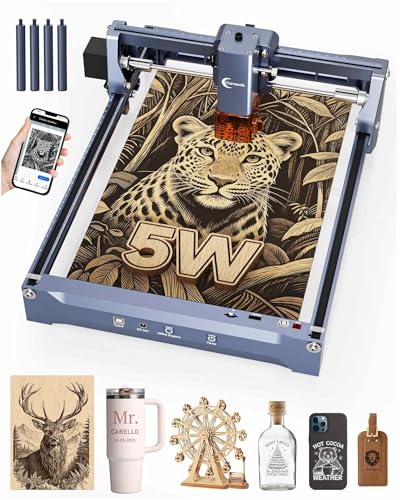
The Carverall K15 Pro delivers real 5W output for reliable engraving and cutting performance. It can engrave on 100+ surfaces and slice through materials like 6 mm wood or 3 mm acrylic, offering substantial capability for plastic-focused projects. It emphasizes zero-fee, maximum compatibility with software tools like CutLabX, LightBurn, and LaserGRBL, supporting Windows, Mac, Android, and iOS. The setup is designed to be straightforward: six screws and a minimal assembly process, with safety glasses and test materials included to help users begin quickly.
With a near A4-sized working footprint, it is suitable for producing mid-sized plastic items, detailed nameplates, and small decor pieces. Its broad compatibility and easy setup make it a versatile option for creators who value strong performance without a steep learning curve. The Carverall K15 Pro is positioned as a robust option for makers who need reliable results across plastics and other materials in a compact package.
Key Specifications and Use Cases
- True 5W power; up to 6 mm wood and 3 mm acrylic cutting potential
- Near A4 work area; easy 90-second setup
- Wide software compatibility; beginner-friendly workflow
For plastic-focused engraving and light cutting, the Carverall K15 Pro provides strong power delivery, precision, and a flexible software ecosystem to support creative and practical applications alike.
Dremel 120-Volt Engraver Rotary Tool

The Dremel Engraver Rotary Tool offers versatile handheld engraving for personalization on plastic, metal, glass, wood, and more. It features a five-position depth dial to adjust engraving depth, enabling fine lines or deeper grooves. Powered by a robust motor delivering 7,200 strokes per minute, this tool is ideal for quick, on-demand projects, detail work, and crafting tasks where mobility and control are paramount. While not a dedicated laser engraver, its broad compatibility with a variety of bits and stencils makes it a practical option for hands-on personalization of plastic items, such as nameplates, tags, and decorative components.
Users benefit from the ability to swap tips to achieve different textures and line qualities, making it suitable for precise line work, decorative engraving, and finishing touches on plastic projects. It is best for those who prefer a manual approach and a modular toolkit that supports a wide range of materials beyond plastic alone.
Key Specifications and Use Cases
- Rotary engraving with depth control
- Wide material compatibility; includes stencils
- Seven-volt, high-speed motor for detailed work
For craft enthusiasts needing flexible, handheld engraving on plastic and other surfaces, the Dremel offers portability, immediacy, and a familiar, widely supported accessory ecosystem.
Buying Guide: Key Purchase Considerations For Plastic Engraving
When selecting an engraving solution for plastic, consider the following factors to ensure you get a tool that matches your needs and skill level:
- Power and precision: Higher laser power generally enables deeper and faster engraving on plastics, but can also increase risk and cost. Look for a device with a measured spot size around 0.04 mm for fine detail and assess the advertised engraving speeds to estimate throughput.
- Working area: For plastic parts, a working area around 130 x 130 mm or larger supports more complex designs. Ensure the size matches your typical project dimensions.
- Material compatibility: Verify which plastics are supported and whether the device can handle common plastics like acrylic, ABS, polycarbonate, and coated polymers. Some machines also work with wood and ceramics, expanding project possibilities.
- Software and workflow: Compatibility with LightBurn, LaserGRBL, or native software can significantly affect ease of use. Ensure your computer and operating system are supported.
- Ease of setup and maintenance: Preassembled units save time and reduce the learning curve. Consider whether the device includes safety gear, test materials, and clear setup instructions.
- Safety and safety features: Laser devices require appropriate safety practices. For handheld tools, consider included eye protection and stable operation guidelines. For laser machines, look for protective covers and proper shielding.
- Portability and space: If you have a small workspace, compact or portable models may be preferable. Consider whether you need a desktop unit or a more extended footprint.
- Support and compatibility: Assess manufacturer support, warranty terms, and the breadth of compatible materials and software updates to ensure ongoing value.
In summary, the best engraving machine for plastic balances power, precision, and convenience. For beginners, a preassembled unit with beginner-friendly software and safety features can reduce friction. For more advanced users, higher-power options with flexible software and a larger working area unlock more ambitious plastic engraving and light cutting projects.