Choosing the right aluminum ramps for semi trailers involves balancing weight, capacity, traction, and ease of use. The following picks cover a range of capacities and configurations—from long, beavertail-end ramps to higher-capacity risers—designed to help fleets and operators load trucks, trailers, and heavy equipment more efficiently. Each option emphasizes corrosion resistance, slip resistance, and sturdy construction to withstand frequent use on American job sites and yards. Below is a quick summary table of the selected products to guide your initial comparison.
| Product | Brand | Approx. Capacity | Highlights |
|---|---|---|---|
| VEVOR Aluminum Ramps, 60″×12″ | VEVOR | 6,000 lbs per pair | Top hook end; light; anti-slip; durable |
| BestEquip 84″×14″ Aluminum Ramps | BestEquip | 6,000 lbs per pair (3,000 lbs per ramp) | All-aluminum; stable; secure top hook |
| Titan Ramps Semi-Truck Riser Ramp | Titan Ramps | Up to 20,000 lbs per axle | Heavy-duty; 9″ lift; lightweight aluminum |
| VEVOR Loading Ramps, 108″×15″ | VEVOR | 10,000 lbs combined | Longer incline; anti-slip plates; rugged build |
| BestEquip 60″×12″ Aluminum Trailer Ramps | BestEquip | 6,000 lbs total (3,000 lbs per ramp) | Beavertail hook end; serrated rungs |
VEVOR Aluminum Ramps, 60″×12″

The VEVOR ramps offer a balanced blend of strength and portability. Constructed from premium aluminum alloy, they support up to 6,000 lbs per pair while weighing about 26 lbs, making them suitable for tractors, ATVs, motorcycles, and trucks. A key feature is their non-slip tread design, which, together with an extension plate and adjustable safety straps, helps prevent tipping or sliding during loading. The ramps employ a stair-step pattern for even load distribution and a 2.36-inch thick main beam for rigidity. These ramps are designed for repeated use in outdoor environments.
BestEquip 84×14 Inch Aluminum Ramps

The BestEquip 84×14 inch ramps deliver a robust 6,000-pound load capacity when used as a pair, with each ramp handling up to 3,000 pounds. Their all-aluminum construction (2.5-inch thickness) offers corrosion resistance and lightness for easy handling. A top hook end enhances trailer attachment for a seamless transition onto the loading surface, while a slip-resistant pattern on the knife-foot base improves stability during loading. This configuration is well-suited for larger vehicles and trailers where a longer ramp helps reduce angle and stress on the vehicle.
Titan Ramps Semi-Truck Riser Ramp

Titan Ramps’ riser ramps are designed for heavy-duty semi-truck applications, offering up to 20,000 pounds per axle. They provide a 9-inch lift, enabling easier access to undercarriages for maintenance tasks such as oil changes and filter replacements. The ramps are built from durable aluminum, delivering a practical combination of strength and lighter weight for straightforward positioning and portability. This option suits fleets requiring higher clearance and more robust service capabilities for large trailer configurations.
VEVOR Loading Ramps, 108×15 Inch
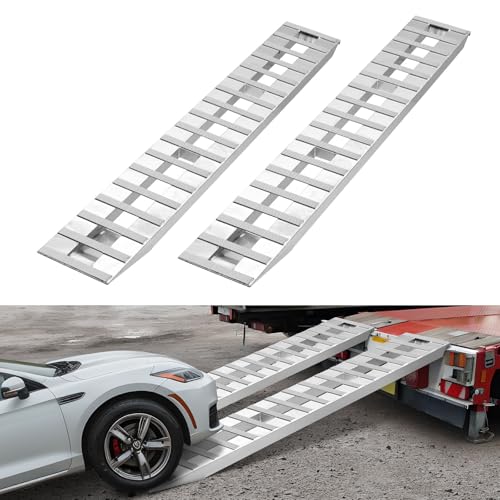
These extended loading ramps measure 108 by 15 inches and provide a combined capacity of 10,000 pounds, making them suitable for heavy equipment like tractors, ATVs, lawn mowers, and motorcycles. The ramps use reinforced welds and thick cross rungs with dual cross-support tubes to distribute weight evenly and resist bending. Anti-slip grooves and a textured surface help keep tires in place, reducing the risk of movement during loading and unloading. The longer length reduces ramp angle, easing operation for wide vehicles or low-clearance trailers.
BestEquip 60″×12″ Aluminum Trailer Ramps
BestEquip’s 60×12 inch ramps provide a total capacity of 6,000 pounds when used as a pair, with each ramp handling 3,000 pounds. The beavertail hook-end design anchors securely into trailer slots, helping to stabilize the loading surface. Each ramp measures 60 inches in length and 12 inches in width, with a thickness of 2.36 inches and serrated cross rungs for improved traction. The combination of a secure hook end and reinforced cross supports offers reliable performance for mid-size trailers and typical heavy equipment loads.
Buying Guide: Key Considerations For Aluminum Trailer Ramps
- Capacity and usage: Match ramp capacity to the heaviest vehicle or equipment you plan to load. For semi trailers and heavy trucks, prioritize higher per-ramp and per-pair capacities, plus overall stability features.
- Ramp length and incline: Longer ramps reduce loading angle and strain on the vehicle, but require more storage space. Shorter ramps are easier to maneuver but may increase ramp angle.
- Attachment and stability: Look for top hook ends, beavertail hooks, or knife-foot bases that securely anchor ramps to trailers. Anti-slip tread patterns and textured surfaces improve traction.
- Weight and portability: Aluminum ramps are lighter than steel, but higher-capacity units can still be heavy. Consider user strength and the need for frequent repositioning.
- Durability and corrosion resistance: Aluminum construction with reinforced welds, thick cross rungs, and protective coatings extends life in outdoor environments.
- Compatibility: Check wheelbase and tire width compatibility (e.g., tires up to a certain width) to ensure smooth transitions and avoid scraping.
- Maintenance: Inspect for bent rungs, loose welds, or worn traction patterns. Clean and store in a dry location to prevent oxidation.
- Storage and mounting options: If space is limited, choose ramps with integrated attachment features or shorter profiles for compact storage in trailers or garages.
- Use-case diversity: For fleets, options like high-capacity risers or longer ramps may cover more vehicle classes, from ATVs to semi-trailers.
In evaluating these aluminum ramps, consider your typical loads, vehicle types, and fleet workflow. The best choice balances capacity, ease of use, and durability while maintaining portable handling for frequent loading tasks. The selections above emphasize secure attachment, anti-slip performance, and robust aluminum construction to support safe and efficient loading operations.