Choosing the right 96-well plate is essential for reliable cell culture results, from growing adherent cells to performing high-throughput assays. This guide highlights five well-regarded options, detailing material, treatment, and design features that affect readability, evaporation control, and growth efficiency. Use the quick-reference table below to compare key attributes and then dive into in-depth looks at each product.
| Product | Material | Treatment | Bottom Type | |
|---|---|---|---|---|
| Weysat 20 Pcs Plate | Polystyrene | Standard tissue culture | Flat | Lid included |
| Nest Scientific 701001 | Polystyrene | Tissue culture treated | Flat | Sterile, individually wrapped |
| Celltreat 229195 | Polystyrene | Sterile | Flat | Lid with evaporation control |
| Advangene U-Bottom 96 | Polystyrene | Tissue-culture treated | U-shaped | Standard lid |
| SPL Life Sciences 96 Well Plate | Polystyrene | Tissue culture treated | Flat | Lid design for gas exchange |
Weysat 20 Pcs 96 Well Plates
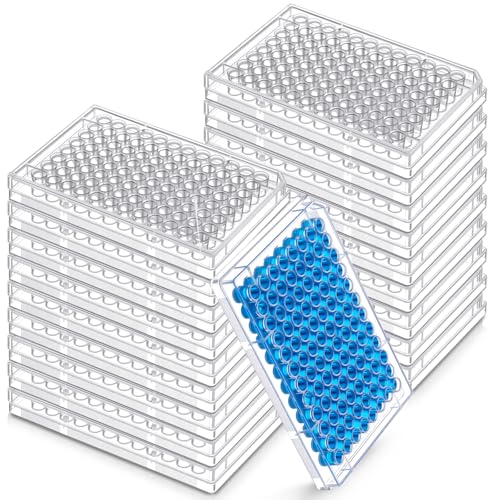
The Weysat set includes 20 tissue culture plates designed for routine lab use and education. Each plate measures about 12.5 x 8.5 x 1.6 cm with a flat, thin-walled design that supports even distribution for optical analysis. Made from optical-grade transparent polystyrene (PS), these plates offer high clarity, smooth surfaces, and durability to resist wear. The lightweight construction helps with handling multiple plates during experiments or teaching labs.
Nest Scientific 701001 96 Well Plate

Nest 701001 is a sterile, clear 96-well plate made from 100% virgin polystyrene and tissue culture treated for cell adhesion. It is E-beam sterilized and gamma-irradiated for batch traceability, with vacuum plasma treatment to enhance surface compatibility. Each plate is individually wrapped and peel-to-open, ensuring aseptic handling in fast-paced lab environments and consistent results across experiments.
Celltreat 229195 96-Well Plate

Celltreat 229195 features a flat-bottom design with a 0.33 cm2 growth area per well and a lid that helps minimize evaporation and cross-contamination. The wells include alphanumeric labeling for easy identification, and the lid has a nesting ring to stabilize tall stacks. These attributes support efficient handling in multi-well assays and clear data organization during screening.
Advangene U-Bottom 96 Well Plate
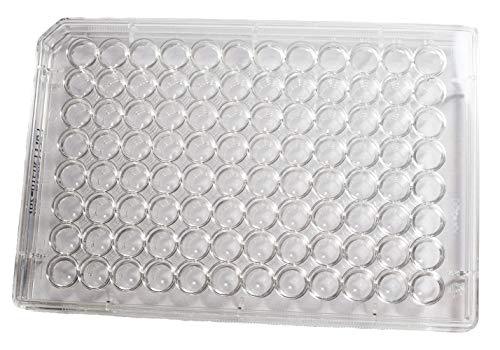
Advangene U-bottom plates are tissue-culture treated polystyrene dishes designed with U-shaped bottoms to maximize cell growth and recovery, which is helpful for adhesion-dependent cultures. Manufactured under ISO9001 standards, these plates are suitable for a range of routine cell culture workflows, including high-throughput screening. The combination of treatment and bottom geometry supports efficient cell attachment and recovery for downstream analyses.
SPL Life Sciences 96 Well Plate

SPL Life Sciences offers a flat-bottom, sterile 96-well plate with tissue culture treatment and an interior lid design that supports efficient gas exchange. Alphanumeric labeling helps track wells during experiments, and the case quantity provides cost-efficient bulk purchasing for labs running multiple assays or educational labs requiring repeated plate use.
Celltreat Scientific 96-Well Plate

CellTreat 96-Well Treated Plate with Lid comes from a well-known supplier of lab instruments. While marketed for general cell culture use, this plate’s treated surface supports reliable adhesion for a variety of cell lines. The lid helps manage evaporation and maintain cell culture conditions during incubations, contributing to consistent data across experiments.
Buying Guide: Key Considerations for 96-Well Plates
- Bottom design: Flat bottoms are common and versatile for imaging, while U-bottoms can improve recovery for adherent cells and certain assays.
- Treatment and sterility: Tissue culture treated surfaces support cell attachment; confirm sterilization method (gamma irradiation, e-beam) for batch traceability and regulatory needs.
- Material clarity and quality: Optical-grade polystyrene offers high clarity for imaging and measurement; ensure smooth walls to minimize artifacts in data collection.
- Sealability and evaporation control: Lids and seals reduce evaporation, particularly important for long incubations and sensitive assays.
- Labeling and identification: Alphanumeric markings or durable labeling help track wells in high-throughput screens.
- Cost and supply considerations: Availability in cases or multi-pack formats affects long-term budgeting for routine labs and teaching facilities.
- Compatibility with equipment: Ensure plate format matches incubators, readers, and robotic systems used in the lab.
- Storage and sterility handling: Individually wrapped vs. bulk sterile plates impact handling and contamination risk in busy labs.