316 stainless steel hex bars are a staple for projects demanding high strength and exceptional corrosion resistance, including marine environments and highly corrosive settings. These mill finish, annealed bars come in various across-flats measurements and lengths to fit machining, fabrication, and repair tasks. This guide highlights five popular options and compares their key specs to help engineers, fabricators, and hobbyists choose the right hex bar for their needs.
| Product | Across Flats | Length | Finish | Feature Focus |
|---|---|---|---|---|
| 316 Stainless Hex Bar (Online Metals) | 0.25″ | 36″ | Unpolished | Excellent corrosion resistance; annealed |
| 316 Stainless Hex Bar (Online Metals) | 0.5″ | 36″ | Unpolished | High strength; marine environments |
| OnlineMetals 5/8″ Hex Bar (Annealed) | 5/8″ | 12″ | Unpolished | Alternative small length; versatile |
| 316 Stainless Rectangular Bar (Online Metals) | 3/16″ Thick x 1″ Wide | 12″ | Unpolished | Broad applicability in oil, aerospace, and marine |
| 316 Stainless Hex Bar (Annealed 7/8″) | 7/8″ | 48″ | Unpolished | Long, strong bar for structural uses |
316 Stainless Hex Bar, 0.25″ Across Flats, 36″ Length

This Online Metals hex bar uses 316 stainless steel for high strength and superior corrosion resistance, suitable for marine environments and other harsh settings. With 0.25″ across flats and a 36″ length, it is designed for precise machining, custom fittings, and small to mid-size fabrication tasks. The mill finish is common for stock bars that will be further processed, ground, or machined. The material’s annealed state supports easy bending and shaping while maintaining structural integrity in challenging environments.
Key advantages include resistance to pitting and crevice corrosion in chloride-rich atmospheres, making it a preferred choice for chemical processing and food equipment components. Applications range from brackets and hardware to custom fasteners and prototype fixtures. Users should account for machining parameters specific to 316 stainless steel to maximize tool life and surface finish quality.
316 Stainless Hex Bar, 0.5″ Across Flats, 36″ Length
This 0.5″ across flats hex bar provides a middle ground between compact and heavy-duty assemblies. The 36″ length facilitates longer spans and simpler handling during machining. The 316 stainless steel composition ensures robust corrosion resistance, supporting use in marine equipment, process equipment, and structural components exposed to moist or salt-laden environments. Annealed to improve ductility, it is suitable for forming operations and lightweight fabrication where traditional hex stock is required.
Manufacturing notes include considerations for turning, milling, and drilling to maintain dimensional accuracy. Surface finishing post-machining can further enhance corrosion resistance and appearance. As with other 316 bars, this option is compatible with stainless steel fasteners and standard tooling designed for austenitic alloys.
OnlineMetals 5/8″ Hex Bar, Annealed, 12″ Length

With a 5/8″ across flats and a compact 12″ length, this annealed 316 stainless hex bar is ideal for smaller fixtures, experimental prototypes, and custom hardware. The 316 composition delivers excellent corrosion resistance essential for marine environments or highly oxidizing settings. The shorter length reduces waste and simplifies routing in shop-made jigs and fixtures. The mill finish accommodates post-machining refinishing or straightforward use as-machined components.
Considerations include machining feed rates and cutting speeds tailored for 316 stainless, to optimize surface finish and tool life. This size is frequently used in building lightweight brackets, supports, and hobbyist projects requiring precise hex interfaces.
316 Stainless Rectangular Bar, 3/16″ x 1″, 12″ Length

This 316 stainless rectangular bar offers 3/16″ thickness and 1″ width, 12″ length, making it suitable for applications in oil and petroleum equipment, aerospace, and marine components. The material’s high strength and corrosion resistance make it a reliable choice for structural and precision parts that require a flat bar profile rather than a round hex. The annealed state enhances formability for light pressing and bending operations, while still providing robust mechanical properties for machining and assembly.
Common uses include fabrication of brackets, panels, and enclosure components. When machining, consider that 316 stainless steel can work-harden under certain operations; appropriate tooling and lubricants help maintain tolerances and finish quality.
303 Stainless Steel Hex Bar, 0.375″ Across Flats, 24″ Length
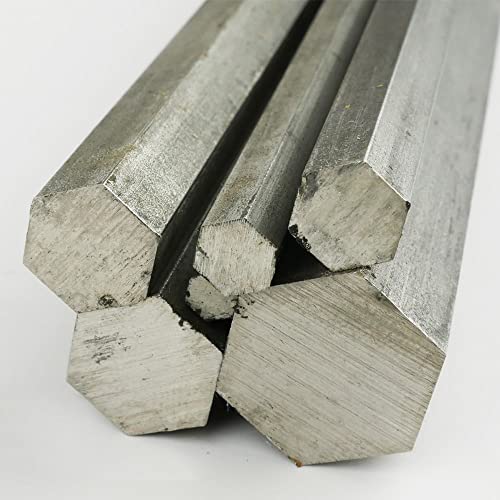
Although not 316, this 303 stainless hex bar offers ease of machining, grinding, and polishing, which makes it attractive for high-precision components where quicker processing is beneficial. It features 0.375″ across flats and a 24″ length, with annealing improving formability. While its corrosion resistance is slightly lower than 316, 303 stainless is a common choice for prototypes, fittings, and fixtures that require fast machining cycles and cost efficiency.
Use cases include cabinetry hardware, brackets, and custom tooling components. It is important to consider the environmental exposure and choose 303 when machining speed is a priority and corrosion risks are manageable within the application.
316 Stainless Hex Bar, 0.25″ Across Flats, 12″ Length

A compact option with 0.25″ across flats and a 12″ length, this 316 stainless hex bar is suitable for small fixtures, model making, and repair components. The material’s corrosion resistance helps ensure long-term performance in moist environments and chemical exposure. Annealed state supports easier forming and bending of small parts. It pairs well with stainless steel fasteners and small hardware assemblies requiring hex interfaces.
Consider tool compatibility and the need for precise hex dimensions in tight tolerance assemblies. Surface finishing and deburring after machining can improve fit and function in professional applications.
316 Stainless Steel Flat Bar 6″ x 1″ x 0.2″

While this entry is a flat bar rather than a hex bar, it is included due to its 316 stainless composition and practical utility in multi-faceted projects. The size is 6″ long, 1″ wide, and 0.2″ thick, with corrosion resistance appropriate for household repairs and light industrial tasks. It supports applications such as brackets, spacers, and small structural components made from stainless steel. The 316 grade ensures resistance to seawater and chemical exposure better than lower grades.
Usage considerations include compatibility with hex components and mechanical fasteners, as well as the suitability of flat bar stock in assemblies that do not require hex profiles for torque transmission or alignment.
316 Stainless Hex Bar, 0.875″ Across Flats, 48″ Length
This long, heavy-duty hex bar provides 0.875″ across flats and a 48″ length for structural and machining tasks requiring substantial stock. The annealed 316 stainless steel offers excellent corrosion resistance and ductility for forming large components, fixtures, or frame members. It is suitable for marine hardware, aerospace-related fixtures, and heavy equipment where a hex profile enables precise torque transfer and alignment. Post-machining finishing may further enhance surface integrity and corrosion resistance.
Engineers should plan for the material’s weight and cutting requirements when selecting this size for projects, ensuring compatible tooling and fixture setups to handle the length and stiffness of the bar.
Buying Guide: Key Purchase Considerations For 316 Stainless Hex Bar
- Material grade and environment: 316 stainless steel offers superior corrosion resistance in marine, chemical, and humid environments compared to 304. For highly saline or aggressive exposures, select 316 with annealed state for improved formability.
- Cross-section and length: Across flats options (0.25″, 0.5″, 0.375″, 0.875″, etc.) influence torque transmission and compatibility with hex-fasteners. Longer bars reduce waste in multi-piece fabrication, while shorter lengths suit prototype work.
- Finish and machinability: Unpolished or mill finishes are common when parts will be surface-finished or coated later. Annealed bars typically machinify more easily, with greater ductility for forming operations.
- Application profile: Hex bars are favored for fixtures, brackets, shafts, and tooling components. Ensure the profile matches the intended load path, torque requirements, and assembly tolerances.
- Machining considerations: 316 stainless can work-harden; use appropriate feeds, speeds, lubrication, and tool materials (e.g., carbide) to extend tool life and maintain dimensional accuracy.
- Availability and length efficiency: Longer bars enable fewer joints in long assemblies but require heavier handling equipment. Shorter bars can simplify inventory and shipping, with easier storage.
- Standards and traceability: Look for ASTM A276 compliance for general-use hex bars, ensuring consistency in chemistry and mechanical properties across batches.
- Cost versus performance: While 316 stainless steel offers superior corrosion resistance, evaluate whether the environmental exposure justifies its use or if alternative grades or coatings are acceptable.
This article provides objective, field-relevant guidance to help select 316 stainless steel hex bars for varied applications. The sectioned product highlights show common stock sizes and finishes that align with typical fabrication and repair tasks, while the buying guide supports informed decision-making across different use cases.