Choosing the right aluminum oxide blasting media can improve surface prep across metals, wood, glass, and stone. This guide highlights five highly effective options, ranging from 100 grit for a balance of speed and finish to finer 120 grit for precision work. Each product is suitable for wet or dry use and offers strong hardness and durability for repeated jobs. Read on to compare key features and select the best fit for your blasting cabinet or blasting gun setup.
| Product | Grit | Brand | Size |
|---|---|---|---|
| HDURCIR Aluminum Oxide 14 LBS | 100 | HDURCIR | 14 LBS |
| HDURCIR Aluminum Oxide 12 LBS | 100 | HDURCIR | 12 LBS |
| TITGGI Aluminum Oxide 80 Grit | 80 | TITGGI | 8 LBS |
| TITGGI Aluminum Oxide 100 Grit | 100 | TITGGI | 12 LBS |
| Striplus Aluminum Oxide #120 Grit | #120 | Striplus | 4 LBS |
HDURCIR 14 LBS 100 Grit Aluminum Oxide

This medium-to-fine blend is designed for both wet and dry blasting, offering a Mohs hardness of 9 for robust metal surface preparation. It’s suitable for removing mill scale and coatings on stainless steel, aluminum, and wood, and can additionally etch glass. The 14-pound package is positioned for cost efficiency in larger jobs, and the grit size supports a balanced approach to cleaning and finishing work.
HDURCIR 12 LBS 100 Grit Aluminum Oxide

This 12-pound option mirrors the 100-grit profile, offering effective rust removal and surface preparation across multiple materials. It shares wet/dry versatility and a hardness rating that supports quick material removal while leaving a consistent finish. The packaging size helps crews optimize throughput on larger projects without frequent restocking.
TITGGI 80 Grit Aluminum Oxide
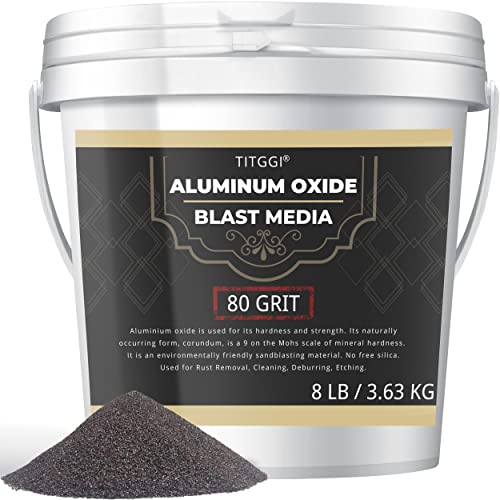
With high hardness and a long cycle life, this brown fused aluminum oxide media delivers strong cleaning and etching capabilities across glass, granite, marble, ceramic, and metal. It claims extended usability—reportedly lasting up to ten times longer than silica media—making it a cost-effective choice for frequent blasting tasks. The formulation is also marketed as eco-friendly with no free silica and 100% recycled material.
TITGGI 100 Grit Aluminum Oxide

This 100-grit option emphasizes a balance between aggressive material removal and a smooth finish. It shares the same hardness level as coarser blends, enabling efficient prep for coats and coatings while reducing overall process time. The product emphasizes recyclability and wet/dry usability for flexible workflow planning in shops and mobile blasting setups.
INTERACTIVIA 100 Grit Aluminum Oxide
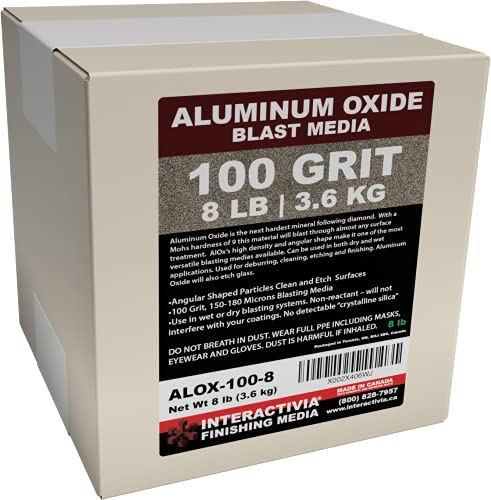
This 100 grit media emphasizes sharp angular grit for efficient removal of coatings, mill scale, and oxidation on glass and metal surfaces. It is marketed as highly reusable and non-reactant, designed to preserve coating integrity during surface prep. The no-crystalline-silica claim aligns with safer blasting practices and improved worker safety.
HDURCIR 18 LBS 100 Grit Aluminum Oxide

This larger 18-pound option maintains the same 100-grit profile with the same hardness and use cases, including wet or dry blasting. It targets high-demand environments where volume and throughput are crucial, enabling extended run times between restocks while delivering consistent surface preparation results on metals and glass.
HDURCIR 14 LBS 120 Grit Aluminum Oxide

At 120 grit, this variant offers finer finishing characteristics while maintaining the same level of hardness. It is well-suited for pre-paint prep where a satin or partially polished result is desirable. Like other HDURCIR options, it supports both dry and wet blasting modes and is packaged to balance cost with throughput needs.
Buying Guide: Key Purchase Considerations
Grit size: Coarser grits (e.g., 80–100) remove coatings and mill scale quickly, while finer grits (e.g., 120) yield smoother finishes and prep-ready surfaces. Choose based on target material and coating state.
Hardness: Aluminum oxide rated at Mohs 9 provides aggressive cutting while preserving underlying substrates. Higher hardness supports faster material removal with less media consumption over time.
Usage mode: Wet vs. dry blasting affects dust, cooling, and finish. Wet blasting reduces dust and can improve surface finish, but may require additional cleanup.
Reusability: Some media are designed for multiple cycles, lowering per-job costs. Check claims about recycle cycles and the practicality within your equipment setup.
Purity and safety: Media with low crystalline silica content reduces health risks associated with blasting. Look for products marketed as low-dust or silica-free when possible.
Packaging: Larger quantities are typically more cost-effective for frequent users but require storage space and long-term use to realize savings. Plan inventory to match workflow demand.
Compatibility: Verify that the selected grit and media type suit your blasting cabinet, gun, nozzle size, and the materials you work with most often (metal, glass, wood, stone).
These selections provide a cross-section of durable, high-performance aluminum oxide media across grit sizes and packaging. Use this guide to align material hardness, finish requirements, and operational constraints with your blasting workflow for consistent results.